Case summary
A failed SATA SSD with a limited recovery path.
The customer reported that the SSD had been slowing down for some time before it failed completely and stopped allowing access to data. This type of failure can indicate NAND degradation, controller instability, firmware problems, or a combination of issues.
Device
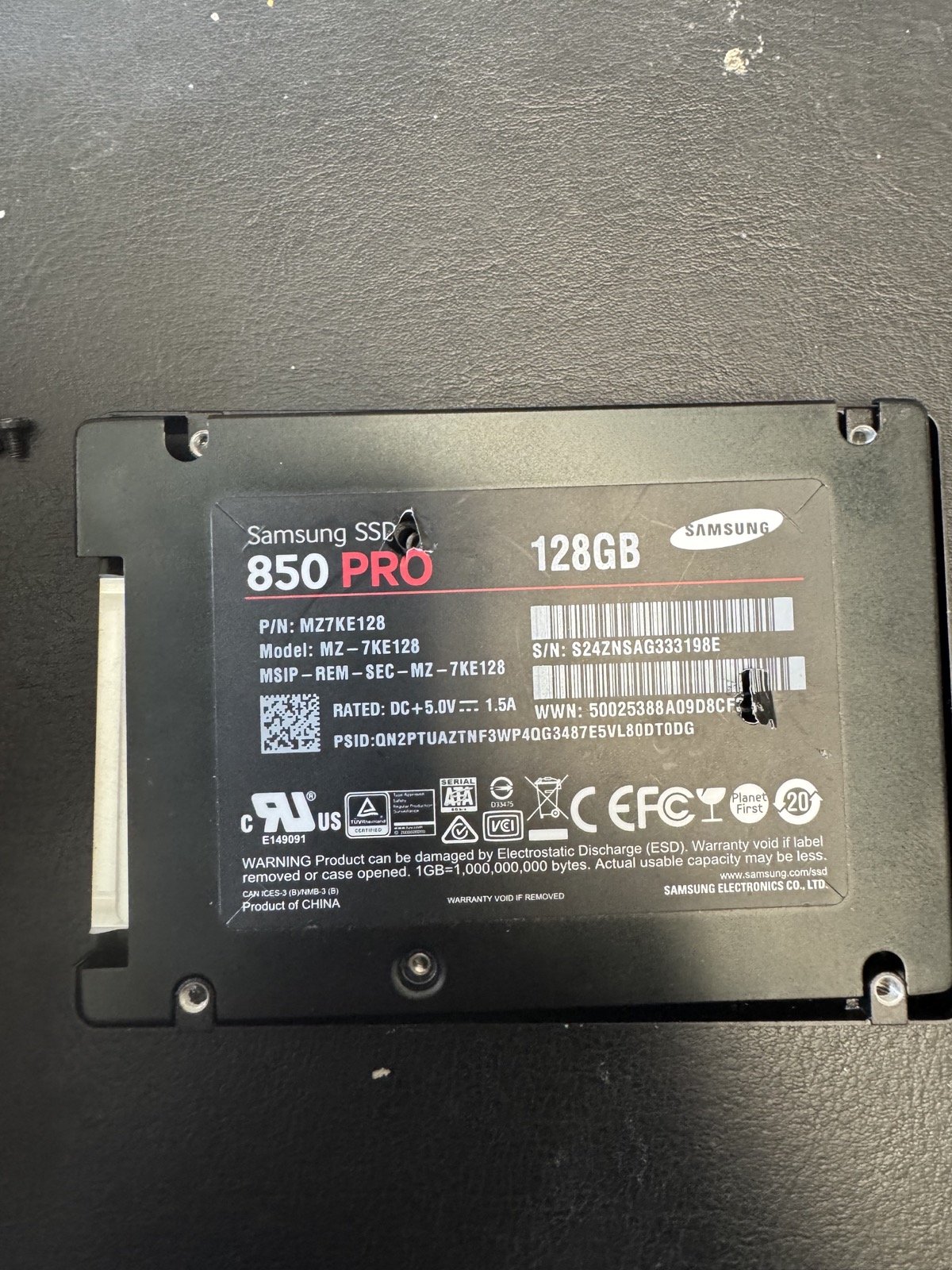
Samsung 850 PRO 128GB SATA SSD.
Failure symptom
The drive became slow over time, then suddenly failed and would not provide normal access to files.
Technical challenge
Internal encryption between the controller and NAND made chip-off recovery a poor option for this family of SSD.
Recovery path
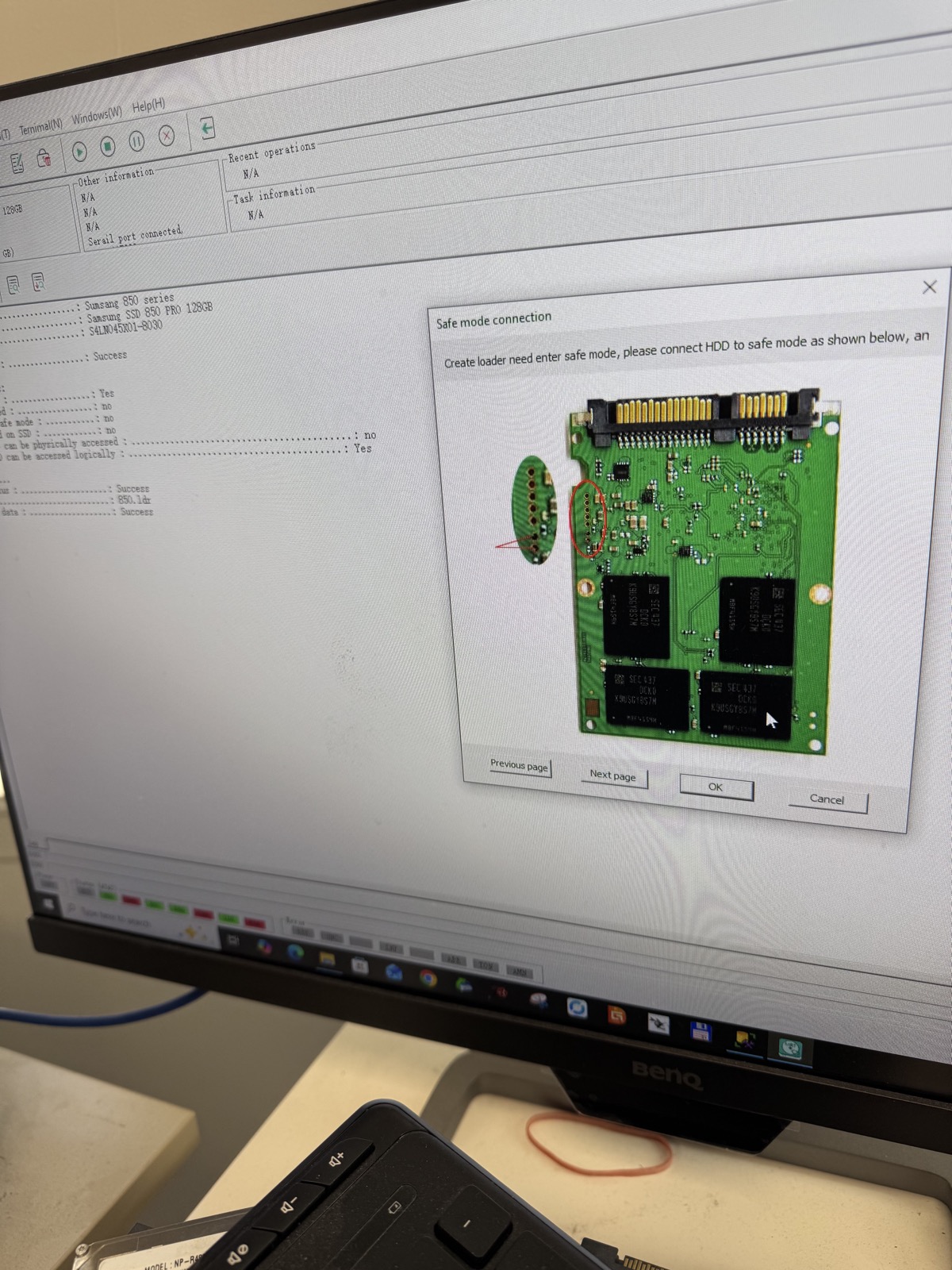
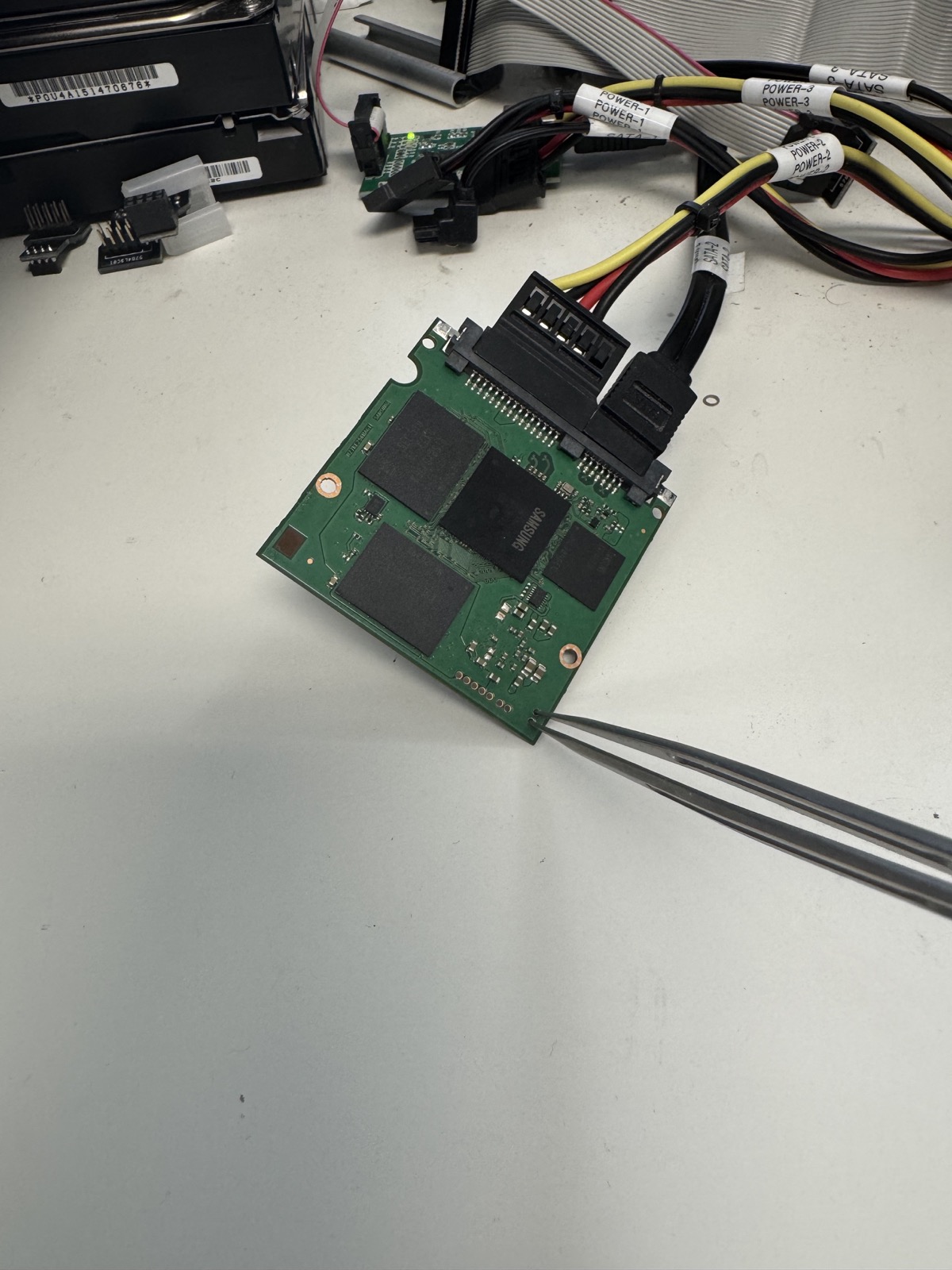
The SSD was handled through a controller-level recovery path, using emergency access and controlled imaging rather than chip-off recovery.
Why this SSD family is difficult
SSD recovery is very different from hard drive recovery.
When a SATA SSD fails, the problem is often controller failure, firmware corruption, NAND memory degradation, or a combination of those issues. Unlike a hard drive, the data is not stored as simple readable sectors on a platter. The SSD controller manages translation, error correction, encryption behavior, wear leveling, and access to the NAND memory.
Firmware on many SSDs is stored in special areas of the NAND that are normally accessible only to the controller. When NAND memory starts failing, the firmware area or translation information can become unstable. That can be detrimental to a successful recovery because there is no reliable way to guarantee the quality of data extracted from severely degraded NAND chips.
These drives are also not strong chip-off candidates. The data stored in NAND is tied to the original controller, translation algorithms, and internal encryption. In most successful cases, the recovery process involves placing the SSD into an emergency or technological mode, loading a small data-access loader with the required translation routines, bypassing the normal controller startup path, and then imaging the accessible data to external media.
Because the recovery path is narrow, repeated power cycling, generic recovery software, and unnecessary writes should be avoided once an SSD starts slowing down, disconnecting, or refusing access.
Outcome
Most of the client data was extracted successfully.
Despite the limited recovery odds and the encryption-related constraints, OmniData managed to extract most of the client data from the failed SSD.